
My Approach to a Solution: What Exactly Did I Do About Chronic Tinnitus?
Last updated: June 2026
What you’re reading here is my personal journey. If you have medical questions or health concerns, please talk to a doctor you trust. Putting the approaches described here into practice is your own responsibility.
Okay, what exactly did I do about my chronic tinnitus back then?
“Just wait and ignore the tone” didn’t work for me. That’s when I decided: I had to do even more. If you’d like, you can read why that happened in my short version.
For my approach, that meant I had to do three things at exactly the same time:
- Reduce the mechanical workload—avoid noise peaks and chronic noise as much as possible, so the already heavily strained ion pumps aren’t overloaded even further.
- Massively ramp up cellular energy production (ATP)—because without an energy surplus, the actual repair (installing new crosslinkers, restoring the framework of the tiny sensory hairs to its upright position) can’t get started. Otherwise, the cell stays trapped in the hamster wheel, as I described on my explanation page about noise-induced tinnitus.
- Provide the right building material—meaning exactly the building blocks the cell can use to build new crosslinkers and actin structures, so it can glue the damaged bundle firmly back together.
Here is the exact sequence that turned things around for me:
Short version Read in 60 seconds—the three paths at a glance
Three types of tinnitus, three different levers. With noise-induced tinnitus, my path was a combination of a noise diet, maximizing periods of deep sleep, and a consistent nutrient protocol (B vitamins, niacin, Q10, omega-3, lecithin, minerals, melatonin) that ramps up ATP production—so the cell gets out of the hamster wheel and can install new crosslinkers. After three to four months, my tinnitus was gone. With stress-induced tinnitus, my path would be conflict work following Michael Prgomet’s method: using the kinesiological muscle test to find active tension fields, “anchoring” stored emotions for a duration determined by testing, and allowing the actual healing to take place at night through the processing that happens in dreams. With toxin- and medication-induced tinnitus, the most important lever is the source: medical diagnostics (including a mobilization test), removal of amalgam fillings, heavy-metal elimination with chelating agents under medical supervision, or, in the case of medications, stopping them in consultation with a doctor. Repair building blocks (lecithin, omega-3, protein, sleep) provide support according to the severity of the damage—up to the full energy protocol for structural damage.
The shared mindset: Give the body what it needs so it can bring itself back into balance.
Part 1: My Path with Noise-Induced Tinnitus
Pillar 1: Reducing the workload
1. The noise diet (a mechanical break)

This was one of my most important realizations: Out of fear of the sound, almost everyone affected surrounds themselves with sound—and at first, that’s what I did for the most part too (back then, mainly by playing background-noise videos on YouTube or leaving the TV on to fall asleep). But sound is mechanical movement. Every masking sound forces the stereocilia to keep moving—that’s pure physics.
Because their stereocilia are tilted out of position, damaged hair cells already have a constantly elevated influx of ions even without external movement. Every additional sound exposure leads to even more ion flow and therefore places an even greater strain on the cell. The result: The ion pumps, which are already running nonstop because of this permanent leak, are pushed even closer to their limit in order to prevent the looming collapse.
And there’s a second, equally serious problem: Constant sound exposure and strong noise peaks make the actin filaments in the damaged bundle slide past one another. As soon as the cell once again has enough energy and building material to insert new crosslinkers between the filaments and glue the framework back together, the ongoing mechanical strain shakes those very crosslinkers loose again before they can bind firmly. Imagine trying to apply fresh mortar between two stones while someone keeps moving the stones back and forth. The result is the same: The cell painstakingly builds things back up, while the sound tears its work down again at the very same time.
(Anyone who wants to understand why this happens at the cellular level will find the full mechanics on my explanation page about noise-induced tinnitus.)
So my approach was this: I had to learn to make room for more silence—in other words, keep sound exposure in my daily life as low as humanly possible—and keep doing that for the entire period until my tinnitus had completely disappeared. My own conclusion was this: Only when the external mechanical irritation stops do the ion pumps, which are already running at high speed, get any breathing room at all—and only then does the cell get the chance to free up some of its energy for repairing the framework.
Along the way, I formulated a basic rule for myself: The better the cell is supplied with energy (ATP) and building material, the sooner it can tolerate mechanical strain from sound again. When that buffer is reached varies greatly from person to person and depends on the starting point, the damaged frequency range, and a person’s overall constitution.
I experienced this rule firsthand on two separate occasions: When I first developed tinnitus (2011), I did have a basic supply of nutrients, but I was running largely on stress energy and cortisol—my energy level was significantly lower than it was later. Accordingly, I had to live under strict conditions back then—for months, almost absolute silence, no music, no headphones, no everyday noise. I even avoided the ticking of every clock.
What follows was very risky at the time and could have caused permanent damage. Do not try this under any circumstances.
Things were different when I had tinnitus for the second time, which I deliberately provoked as an experiment back then: After years of consistently supplying my body with nutrients and sleeping much better, my ATP reserves were on a completely different level. This time, a smart compromise was enough—consistently avoiding noise peaks (no headphones, no stereo turned all the way up, no clubs), but otherwise living a completely normal life. I went shopping, went to the fair and the movies, and met friends. And yet the tinnitus was completely gone after about three to four months. (You’ll find the complete story of both healings in my short version.)
To me, that was the most striking evidence that the question isn’t “How completely do I need to withdraw from everyday life?” but “How well supplied is my cell right now?” The higher my ATP level and the better my supply of building material, the more everyday sound my system could tolerate—and the faster the repair progressed at the same time.
2. The cellular night shift (maximize periods of deep sleep)
I paid more attention to sleep than to anything else back then—and in the morning, after a good night, the tone was always at its quietest. That’s no coincidence: During deep sleep, the body ramps up its repair work. Growth hormones, protein synthesis, the immune system.
This applies especially to hearing: The ear is set up to recover at night because stimuli from the environment decrease drastically and it no longer has to listen actively and analytically. That break from active listening frees up the capacity and energy the cell needs for repair. Deep sleep was therefore an absolutely decisive factor for me throughout the process.
Pillar 2: Maximizing energy (my personal approach)
When I first had tinnitus (2011), sleep and avoiding noise (Pillar 1) initially brought the first noticeable improvements. The system settled down slightly. But at some point, I hit an invisible wall—a plateau where, despite all the quiet, nothing improved any further. Looking back, that makes sense to me now: The cell was still stuck on the hamster wheel. Rest alone wasn’t enough to start the actual repair. It simply lacked the energy.
The first time I had tinnitus, that led me to gradually work my way toward addressing this energy problem through a long, arduous process of experimenting with nutrients—B12 injections, lecithin, and a broad orthomolecular regimen. The entire journey is described in detail in Part 1 of my biography. It ultimately worked, but it was anything but efficient.
The decisive breakthrough came only some time later, when I discovered how ATP can be ramped back up systematically and quickly in collapsed cells—not in my ear, but throughout my body. In 2013, I had crashed into chronic fatigue syndrome (CFS), with a documented ATP value of 0.37 and almost complete confinement to bed. What got me back on my feet was a specific approach based on liquid nutrients—in combination with gradually building up my exercise routine to improve my circulation (my circulation had hit rock bottom at the time, and good circulation is a key element when it comes to energy) and markedly improved sleep. This combination gave my energy metabolism such a powerful boost that within two months I went from being bedridden to getting my life back: I could function normally day to day and exercise again. Over the following two years, I eventually even made it back to a physically very demanding full-time job.
When I was confronted with tinnitus for a second time years later, I had a genuine, tried-and-tested system at my disposal for the first time. It was clear to me that, despite their different causal chains, tinnitus and CFS shared the same eventual cellular bottleneck—a massive shortage of ATP energy, which in this case blocked the repair of the damaged stereocilia. During my deliberate self-experiment, I had stopped taking the supplements. After calling it off, I immediately resumed my full protocol. I used this exact nutrient system again as my personal “bypass,” this time specifically for my ears.
The basic requirement: eat enough
Before I get to the specific daily routine, there is one point that sounds so trivial that most people with tinnitus overlook it completely—and that is precisely why I want to put it first and state it explicitly: Eat enough. ATP ultimately comes from calories. From the carbohydrates and fats your body can actually burn. Anyone who diets or runs a calorie deficit during this repair phase is sawing off the branch they’re sitting on—the energy available for cellular repair drops markedly. Without this energy foundation, things get really difficult.
On that basis, this is what my daily routine looked like at the time:
1. The morning kick
As described above, I once again used the same products that, in combination with my adjusted lifestyle, had already helped pull me out of CFS—I knew the daily routine inside out and knew what effects it had on my energy level. I started my day on an empty stomach immediately after waking up. I mixed a nutrient concentrate containing B vitamins and niacin into a large glass of water. In addition, I always drank half a liter of plain water in the morning—deliberately, so that my blood would flow more freely and transport would run smoothly right from the start.
Here is what happened: Shortly after I drank it, the typical niacin flush began—my face grew warm and my ears reddish. Niacin dilates the peripheral blood vessels—to me, that was tangible confirmation that the supply route was now especially wide open. Ramping up ATP inside the cell is crucial, and supplies reach their destination all the more effectively when blood flows freely through the inner ear’s finest capillaries. To me, the flush was a tangible signal: Fuel and building material now had a clear path to the hair cell.
Important context: At the dose I take (see the products page), the niacin flush is noticeable but moderate—the face and ears grow warm, sometimes reddish, and possibly the hands as well. It isn’t the extreme, bright-red, whole-body effect seen in some videos, where people take grams of pure niacin and look like a lobster from head to toe. That severe effect generally results only from a substantial overdose. Anyone who has never taken niacin before may still be a little startled the first time—the reaction is harmless and subsides on its own after 20 to 30 minutes.
2. The basic supply (about 30 minutes later)
About 30 minutes later, I took a broad-spectrum nutrient supplement. My aim was to give my body a broad foundation over the course of the morning so that my metabolism would run steadily throughout the day and no energy gaps would develop. The proportion of fat-soluble vitamins and vitamin C was particularly important to me—fat-soluble vitamins play a reinforcing role in cell protection and also act directly as cofactors in energy production, while vitamin C is involved as a water-soluble cofactor in countless metabolic processes. This exact combination is often overlooked when someone is searching for “the one vitamin” or “the one mineral.”
At the same time, I added a few drops of an omega-3 oil containing Q10 directly to this nutrient drink and drank it all together. This combination was no accident: As their name suggests, fat-soluble vitamins need oil for the body to absorb them properly in the first place. And because Q10 is also fat-soluble, the omega-3 oil carried it along as well. A simple but very effective combination.
Q10 has a specific job in my protocol—this is how my alternative health practitioner explained it to me at the time: Q10 sits directly in the mitochondrial respiratory chain and fires up carbohydrate metabolism in particular. It works like an extra helper in converting fuel into usable energy. And ATP is the absolute bottleneck in the hamster-wheel scenario. As long as the ion pumps consume all the available energy just to manage the permanent leak, there is simply nothing left for the construction workers up at the stereocilia framework. Only once there is a surplus can the actual repair begin—putting in new crosslinkers and gluing the bundle back together into a rigid rod.
3. Lecithin (throughout the day, after meals)
Lecithin was something I took without a fixed schedule—usually after a meal, spread throughout the day, often between noon and evening. Lecithin provides phospholipids, the raw material for the cell membranes in which the pumps, receptors, and structures can be properly positioned in the first place.
4. The nightly repair phase (in the evening)
About an hour before bed, I drank a mineral drink—which included magnesium—and mixed the melatonin directly into it. This allowed me to take both in one go. Magnesium and the other minerals help the body enter rest mode, while melatonin supports both falling asleep and deep sleep. The cell needed this exact phase to actually rebuild the damaged framework: At night, the mechanical stimuli affecting the ear largely disappear, the pumps no longer have to operate at their absolute limit, and the energy that is freed up can flow into the actual repair.
You’ll find the exact amounts and doses I used at the time on my products page—with all the details about the individual products and notes on individual adjustment.
The result: Within about three to four months of consistently following this protocol—combined with the noise diet—my condition improved so dramatically that my tinnitus disappeared completely.
Scientific context
My approach may sound unconventional at first. But the idea that increasing ATP in cochlear cells promotes recovery after noise damage is now being actively pursued in pharmaceutical research as well. The drug AC102 (AudioCure Pharma), which is currently being tested in a European Phase 2 trial, works on the same basic principle: It increases cellular ATP production and reduces oxidative stress in hair cells. In preclinical studies, a single dose significantly reduced tinnitus behavior in Mongolian gerbils and restored damaged auditory-nerve synapses. In a parallel hearing-loss model, hearing thresholds improved by 13–31 dB—a significant improvement, though not a complete restoration.
Low-level laser therapy (photobiomodulation), which has been used in specialized practices for decades, also targets the same mechanism: Near-infrared light increases mitochondrial activity and thus ATP production in cochlear cells.
Three different routes—drug, laser, nutrient protocol—therefore aim for the same goal: supplying the cell with energy again so that it can step off the hamster wheel and restart its own repair machinery. My route was the oral, nutrient-based approach.
Anyone who wants to dig deeper into the scientific basis—including the research on Q10, ATP metabolism, and cochlear recovery—will find the relevant evidence on my sources page.
What I actually used
You’ll find the products I personally used along the way on my products page. I list everything there transparently—including whether and how I am connected with the manufacturers involved.
Important: The fact that these products played a decisive role for me does not mean that they will have the same effect for everyone else. Every body is different, every person’s tinnitus has its own history, and my path is no guarantee for anyone.
My conclusion on noise-induced tinnitus: staying the course
For me, the entire process was not a quick fix but a marathon. Cellular repair takes energy—that is a biological reality. The decisive question is where that energy comes from, how it is distributed, and whether there is enough of it.
When I stopped exposing my ear to unnecessary sound (Pillar 1) and began deliberately supplying my body with nutrients (Pillar 2), something started to shift for me. My tinnitus is still completely gone today and has not returned.
Research now also shows that the basic idea—energy as the key to inner-ear recovery—is no fantasy: AC102 and laser therapy target exactly that.
Part 2: My Proposed Solution for Stress-Induced Tinnitus
So much for noise-induced tinnitus. But not all tinnitus is the same—and stress-induced tinnitus is a completely different beast. The same strategy doesn’t work because the ear itself isn’t the problem. As I describe in detail on my page on stress-induced tinnitus, the cause lies in the nervous system itself—in electrically charged conflicts that remain locked in place instead of resolving.
That also means the path to improvement looks different. This isn’t about supplying hair cells or ramping up ATP. It is about getting the trapped current moving again.
Why I’m sharing this approach—even though I’ve never had stress-induced tinnitus myself
Before I explain what I would actually do, an important clarification: I have never had stress-induced tinnitus myself. I don’t know firsthand what this type of tinnitus sounds like. My confidence in the approach I share here comes from three other sources:
First, I experienced this method firsthand—though in a different context. In 2013, my nervous system was so massively overstimulated by psychosomatic stress that I was suffering from severe CFS symptoms. The alternative health practitioner and lecturer Michael Prgomet, who has worked with this exact approach for more than 30 years, helped me resolve these deep-seated tensions at the time. So I know firsthand how this method feels and what it sets in motion biologically.
Second, I witnessed other patients improve markedly through this work at the practice—patients with a wide range of psychosomatic symptoms, including a handful with stress-induced tinnitus.
Third, Prgomet himself has decades of experience with this form of tinnitus and has successfully worked with numerous cases during that time. That is his statement, not mine, and I am passing it on exactly as I know it.
This combination—my own very positive experience, witnessing other cases, and Prgomet’s decades of practical experience—is why I feel confident sharing this path here. Not as a promise of a cure, but as what I would do myself if I were confronted with stress-induced tinnitus.
The basic idea: activate the conflict instead of avoiding it
When an emotion has been blocked or suppressed, its electrical current remains trapped in the nervous system. This is especially true when someone spends minutes immersed in distressing feelings—such as despair, fear, or the sense that there’s no way out—without finding one. In precisely these moments, new neural connections form that store the conflict as unresolved. These stored fields of tension later discharge uncontrollably—sometimes through the auditory system.
The way out is to reactivate the old conflict instead of continuing to avoid it. There is no need to know or analyze the original situation in detail. It is enough to find an emotion that comes close to the original one and consciously allow it. Phrases such as “I can’t go on,” “Everything is too much,” or “I can’t see a way out” reactivate the old neural connection. And in that moment—with awareness and the willingness to allow the emotion instead of suppressing it—the brain can build a new, corrective connection.
Step 1: the kinesiological muscle test

In practice, it goes like this—this is how I experienced it myself with Michael Prgomet in 2013: You lie on a treatment table. A therapist or someone you trust tests you. You raise your stronger arm and hold it extended; the person opposite you takes hold of your arm and presses lightly against it while you resist.
As long as no conflict is active, the arm remains stable. But when a phrase or thought touches a conflict stored in the nervous system, muscle tension drops for one to two seconds. The arm briefly becomes weaker. That signals an active stress point in the nervous system.
An honest word on this: I am aware that the kinesiological muscle test is scientifically controversial. But that is mainly because of how it is often used—as a kind of “truth oracle” meant to identify allergies, intolerances, or diagnoses through yes-or-no questions. That is exactly the application for which it has been studied and found unreliable—and honestly, in my view, that isn’t what it is intended for in the first place.
That is expressly not how Michael or I use it. For us, it is not a diagnostic or truth test but solely a stress indicator: a clue as to whether the body still responds to a particular topic with inner tension—provided the test is performed properly. So it is never about “right or wrong,” but only about the question: Is there still stress—yes or no?
Step 2: go through the topic areas
Now you ask your subconscious directly, out loud: “I want my tinnitus to be processed and resolved as quickly as possible. Where should I start?”
Then you work through a list of areas: head, neck, abdomen, chest, emotional heart, blockage 1, blockage 2, environment, and others. The area that causes your arm to weaken is where the strongest electrical load currently lies. You receive this list after the initial consultation with Prgomet or as part of his self-therapy concept.
The head area is one example: If the head reacts, emotions associated with mental pressure, overwhelm, or loss of control are often active there. Typical trigger phrases that you then test one after another include:
- “That gives me a headache”
- “Wanting to force something”
- “No longer being able to think clearly”
- “Thoughts are in a fog”
- “Not defending oneself”
- “That gets me worked up”
- “I can’t find a solution”
- “Desperately searching for a solution”
- “Losing track of things”
- “Losing control of one’s thoughts”
Whenever your arm gives way at a phrase, you know: this emotion is active and needs to be anchored. Make a note of those phrases.
Step 3: test the duration
Before the actual process begins, we use the kinesiological test to determine the required processing time. That may sound magical at first, but in reality it is a purely physiological stress readout from your own body (in psychology, people also speak of interoception or Eugene Gendlin’s “felt sense”—the body reporting its own internal state). When you mentally attune yourself to an emotion and ask about periods of time one after another—for example, 3 minutes, 5 minutes, 7 minutes—this is what happens: Numbers that do not match the emotional weight of the issue produce no response at all in the nervous system. No stress impulse arises, and the arm remains strong. But when you arrive at the duration this topic actually needs, the nervous system responds—for a moment, so much stress-related electrical current flows that muscle tension briefly drops and the arm gives way. So this is not an external oracle proclaiming a magic number, but an internal readout of the question: “How long does my system need to safely digest this topic?”
As soon as the arm becomes weaker at a number, that is the appropriate duration. If it becomes weaker at six minutes, for example, that is the average value for the emotions in this area. Not every individual emotion needs exactly that amount of time—some resolve after just three minutes, while others take longer. Using the average keeps the work manageable and provides a clear frame of reference.
Step 4: anchoring
Now comes the actual process. You voice the relevant emotion in a calm, steady rhythm—while focusing at the same time on a visual stimulus, such as a colored spinning disk or a screensaver. This activates the brain’s emotional center and visual system simultaneously. It is precisely this parallel activation that allows the old connection to dissolve and a new, calmer pathway to be built.
Important: Stay relaxed and simply allow the emotion to be there, without analyzing or judging it. If you notice yourself getting distracted, just start over. What matters is that you keep going for the full amount of time determined by the test—for example, six minutes. This steady repetition keeps the process on track and prepares the conflict for the subsequent resolution, which takes place predominantly during sleep and in dreams.
Step 5: conflict resolution, also called trauma resolution—where the actual healing happens
After anchoring, you don’t need to do anything else. The main work takes place predominantly at night, during sleep and in dreams. Michael Prgomet calls the entire process conflict resolution, also known as trauma resolution.
The subconscious continues working on its own and searches—as he puts it—for the “best solution” to the current situation in life. The tension that was previously stuck in the system discharges, the inner pressure goes away, and the nervous system finds its rhythm again.
Incidentally, the body may even react more strongly during the first few days—this is a known phenomenon in psychotherapy and is generally no cause for concern. After that, things usually become noticeably calmer.
How you can put this into practice
There are three ways:
- Directly with a therapist, for example with Michael Prgomet himself. His initial consultation is free, and he is available by phone, on WhatsApp, or in person.
- At home with a trusted person who helps you do the muscle test according to the instructions.
- Through his self-test—the concept is called “KS Eigentherapie” or “KS Selbsttherapie.” It contains the complete instructions, background information, and video instructions. He provides the necessary list of topic areas after the initial consultation by email, on WhatsApp, or in person.
I receive no commission or anything similar if someone goes to Michael Prgomet or uses his self-therapy. I mention him here out of genuine gratitude and conviction because his work helped me at the time.
Why this often works faster with stress-induced tinnitus
One important point in closing: With more deeply rooted psychological conditions such as depression, this process moves much more slowly because the tensions run deeper and are layered more intricately. Stress-induced tinnitus generally sits closer to the surface. Improvement can therefore become noticeable within just a few weeks or months in many cases—while more deeply rooted emotional conditions take considerably more time.
Part 3: My Proposed Solution for Toxin- and Medication-Induced Tinnitus
So much for stress-induced tinnitus. That leaves the third path—and once again, it plays by completely different rules. With toxin- and medication-induced tinnitus, the lever lies neither in supplying nutrients as it does with noise-induced tinnitus nor in conflict work as it does with stress-induced tinnitus, but right at the root: the triggering substance. As long as that substance continues acting in the body, any repair is severely limited—regardless of what else is tried at the same time.
An important clarification up front
Before I get started, I need to mention one thing briefly: With noise-induced tinnitus, I know exactly what works—after all, I’ve done it myself twice. Things are different with toxin-induced tinnitus. In that case, I don’t have a healing story of my own that I can show you.
What I do have, however, is a model that connects the dots across decades of research. It brings several known biochemical facts together and derives from them a strategy that makes sense to me. So: not a protocol I’ve experienced firsthand, but a model—which I’m passing on to you here as a guide.
What happens in the body—in brief
Heavy metals and ototoxic medications damage the auditory system at various levels. Among other things, they block the ion pumps, damage the mitochondria, attack the myelin sheath of the auditory nerve, or even irritate auditory pathways in the brain (though in my estimation, the latter is a rarer case and not the most common trigger of tinnitus). Which of these mechanisms is most prominent for you depends on the specific substance and your individual history. You’ll find the full mechanics in detail on my explanation page about toxin-induced tinnitus.
But what matters for the solution is the same regardless: The source has to go. Only then can the body repair the different kinds of damage in the first place, depending on the cell type.
Step 1: do you have any real reason to suspect it?
Before we talk about approaches to a solution, an honest first question: Do you have any specific reason to believe that your tinnitus may have been triggered by toxins or heavy metals?
That may sound trivial at first—but it isn’t. Identifying heavy-metal-induced tinnitus is damn difficult. The symptoms are often diffuse and, above all, overlap with completely different complaints. According to my research, heavy metals can contribute to allergies, atopic dermatitis, chronic fatigue, difficulty concentrating, and other problems, usually in combination with other factors. And yes, unfortunately there is no simple self-diagnosis tool that tells you, “Yes, that’s it.” What people usually have instead are clues.
In my opinion, clues include:
- Occupational exposure—for example, working in a dental practice that handles amalgam, among other things, or in a paint shop, the chemical industry, and so on
- Several amalgam fillings in your mouth—or their recent removal without protective measures
- A specific event you remember: a broken mercury thermometer or a dropped compact fluorescent lamp
- Old lead pipes in the building you live in, and so on
In my opinion, it is especially important to look closely if other diffuse accompanying symptoms—such as allergies, skin problems, or cognitive lapses—appeared at the same time as the tinnitus.
Without a clue like that, heavy-metal-induced tinnitus is honestly rather unlikely. In my estimation, chemically induced forms of tinnitus account for only a small proportion of all cases anyway.
Step 2: the most important step—eliminate the source
If you genuinely have reasonable grounds for suspicion, the first step is not self-medication or a nutrient protocol. It is professional evaluation and removal of the toxin source.
As long as heavy metals continue to enter the body—for example, from fillings, contaminated rooms, or your workplace—any repair work on the nerve is an exercise in futility. The body rebuilds, the toxin keeps attacking, and the damage remains.
Diagnostics: measure first, then act
If you suspect your body is carrying a heavy-metal burden, my first recommendation to anyone would be to consult an experienced doctor or an environmental medicine specialist—in other words, someone who really understands toxicology. This is especially important for targeted blood tests and proper diagnostics. They simply have the instruments and the authority you need for that. An alternative health practitioner can certainly support you along the way—but in my view, the actual diagnostic work clearly belongs in a doctor’s hands. A good place to find a suitable doctor near you is the member directory of the Europäische Gesellschaft für Klinische Umweltmedizin (EGKU).
The mobilization test—sometimes also called a provocation test—plays a particularly important role here. In this procedure, a physician administers an agent that mobilizes some of the heavy metals stored in the patient’s tissues in a controlled way—in other words, briefly releases them from where they are stored, in an amount that can be measured in a laboratory without overloading the body. They enter the bloodstream and can then pass into the urine; laboratory tests can detect them in blood or urine. The physician can then see it in black and white: for example, mercury elevated twentyfold, lead threefold, cadmium slightly above the normal range, and so on—or no abnormal findings. That is precisely what turns a vague suspicion into a concrete basis for the entire treatment.
Eliminate the source
The actual work begins only once it is clear which metals are present and at what levels—and, ideally, where they are coming from.
For suspicious amalgam fillings, I would only go to a dentist who specifically specializes in environmental dentistry—in other words, one who follows its standards by using a rubber dam, separate suction, and the appropriate protective measures. Poorly performed removal can cause more harm than the filling itself. A good place to find a suitably qualified dentist near you is the directory of the Deutsche Gesellschaft für Umwelt-ZahnMedizin (DEGUZ).
With acute sources such as a compact fluorescent lamp or occupational exposure, on the other hand, the rule is: identify the source, avoid it, and arrange for remediation.
Removing the metals from the tissue
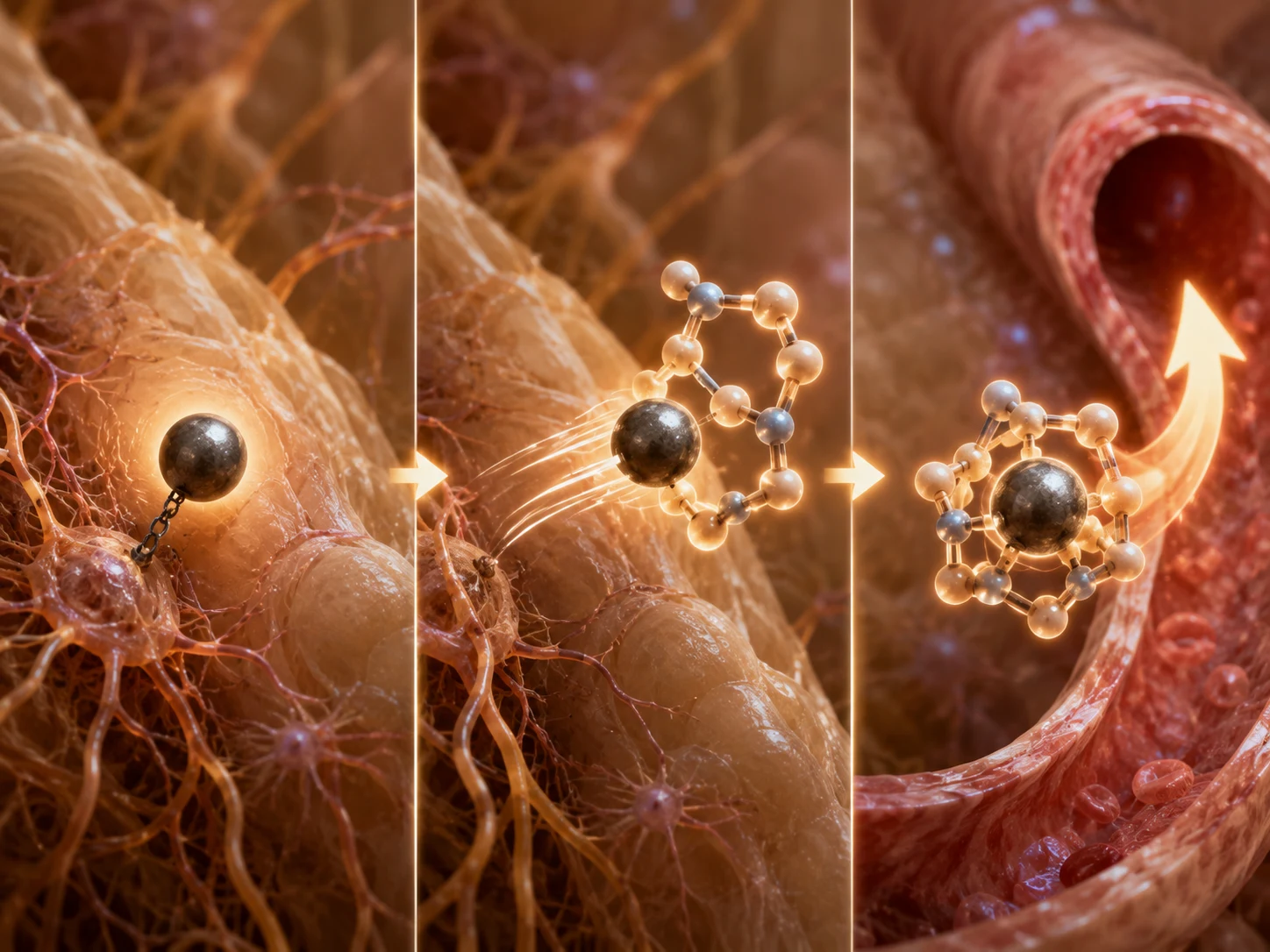
This is where so-called chelating agents mainly come into play. These are substances that selectively bind heavy metals, among other things, and allow them to be excreted through the kidneys or stool.
Put simply, it works like two magnets of different strengths. The heavy metal sits firmly in the tissue or in your cells, bound to the body’s own structures—especially to sulfur-containing components of proteins. This bond is stable enough for the metal to remain there for years without migrating out on its own. The chelating agent is, so to speak, the even stronger magnet: When it comes close, the metal chemically jumps over to it. The complex is water-soluble, enters the blood, and leaves through the kidneys—done. It isn’t real magnetism but chemical competition—but I think the image captures the effect quite well.
This exact mechanism is crucial when heavy metals are lodged deep in nerve tissue. Simple home remedies such as bentonite (healing clay) or chlorella are useful too, but they play a different role—they bind heavy metals mainly in the intestines and prevent metals excreted through the bile from being reabsorbed. In other words, these binders scarcely enter the blood and therefore do not reach the nerve tissue either. So, based on what I have researched so far, these binders do not draw mercury out of the auditory nerve. In short: Anyone who seriously wants to remove heavy metals from inside the body generally cannot avoid using genuine chelating agents under medical supervision.
One thing that also deserves a separate mention is coriander (also called cilantro), because a special role is attributed to it in naturopathy—for example, in Dr. Dietrich Klinghardt’s protocols. This assumption comes from decades of naturopathic practice and is not supported by conventional clinical studies. Unlike conventional chelating agents, it does not bind heavy metals directly but mobilizes them from deeper stores such as brain tissue or the mitochondria—in other words, exactly where a large part of the damage often lies in heavy-metal-induced tinnitus.
If coriander is used in therapeutic quantities while no binding agent is acting in the blood at the same time—such as a conventional chelating agent under medical supervision—some of the mobilized metals can be redeposited elsewhere on their way through the system before they even reach the intestines. This is called the “re-toxification effect,” and it can even make the symptoms markedly worse in the interim. In other words, taking chlorella or bentonite at the same time does make sense—but as mentioned above, they act mainly in the intestines and therefore cannot guarantee that mobilized metals will not become lodged elsewhere along the way.
So this is clearly a job for an expert, not something to do on your own.
Anyone considering this alternative route can seek out specially prepared chlorella and coriander tinctures used in naturopathic medicine. These are generally quite expensive, but naturopathic practitioners believe—and observe in practice—that they can support the mobilization and removal of heavy metals from tissue.
Despite all that, I would personally be more inclined to recommend the medical route—with controlled blood tests, the conventional mobilization test, and an expert to turn to. Or at least a combination of the alternative and medical routes: medical diagnostics beforehand and a follow-up blood test after following the alternative approach for several months to see what is actually happening.
Where medication- and heavy-metal-induced tinnitus differ
At this point, it is worth looking at an interesting difference: With some medication triggers—take a brief aspirin overdose, which normally means several grams—the system often recovers surprisingly quickly on its own after the medication is stopped. Why? Because the hair cell’s hardware was not physically damaged at all. It was “only” a biochemical derailment, and the system returns to normal as the medication disappears.
Heavy metals are a completely different story. They become lodged deep in nerve tissue and are released by the body only agonizingly slowly. Here, recovery takes much longer and needs active support—both through properly managed elimination and through what comes in the next step: the right building material for repair.
Step 3: what support really makes sense
Once the source has been eliminated and—if necessary—elimination is underway with support from a doctor, the next question arises: What can I contribute from my own experience to support the repair phase?
Here I need to be honest again—and say the opposite of what many tinnitus websites want to sell you: With purely heavy-metal-induced tinnitus, once the source is gone and if you are generally healthy and not too old, I am convinced that you don’t need an elaborate energy protocol like the one for noise-induced tinnitus at all. The body can regenerate surprisingly well on its own—just much more slowly than it would with full energy support.
Honestly, I even suspect that many people would heal without any supplements at all once the toxin source is gone—simply with time, enough sleep, and a good diet. The body itself can produce phospholipids and similar substances to some degree if the building blocks come from food. Healing just takes considerably longer, and that means living with the tinnitus during that time.
Three levels of severity, three different repair needs
Exactly how much repair support your body needs depends on how deep the damage goes. I distinguish between three levels of severity in heavy-metal-induced tinnitus—the boundaries are not clear-cut.
Level 1—Nerve damage (most common case): The main problem here is the damaged myelin sheath of the auditory nerve between the inner ear and brainstem. The nerve is irritated, inflamed, and conducts signals incorrectly. The hair cells themselves, however, are largely intact; their structures still function. In my estimation, this basic regimen alone—lecithin, omega-3, protein, and sleep—combined with heavy-metal elimination is enough in many cases.
Level 2—Biochemical stress in the hair cell: Here, the heavy metals in the hair cells have blocked the ATP pumps, inhibited mitochondria, and disrupted enzymes in energy metabolism. They have also often displaced zinc at the receptors of the auditory nerve—and zinc acts there as a natural brake that protects the nervous system from overreacting to every small stimulus. When this brake fails, the auditory nerve also becomes excessively excitable. The ion balance is thrown off, more potassium and calcium flow in, and oxidative stress rises. But—and this is the decisive point—the structural building blocks of the hair cell (actin filaments, crosslinkers, stereocilia geometry) have not yet been destroyed in this state. They are only under biochemical pressure. In addition to the basic setup, the full energy protocol from Pillar 2—B vitamins, Q10, minerals (specifically including zinc and selenium), and antioxidants—helps here by ramping energy metabolism back up, taking some of the load off the pumps, and replenishing the displaced trace elements once heavy-metal elimination is underway.
Level 3—Structural damage (most severe case): If the heavy-metal burden has been high for a really long time, the hair cells eventually become so weakened that genuine structural damage occurs even without a classic noise trauma. It no longer takes a night at a club with 110 decibels—normal everyday noise is enough to blow through the last reserves. Actin connections tear, crosslinkers break, the stereocilia buckle, and their geometry tips out of alignment. In the end, this brings us to the same end state as noise-induced tinnitus: persistently bent sensory hairs, tip links under constant tension, ion channels constantly open, and the hair cell on the energy hamster wheel. The difference from tinnitus caused purely by noise is that the heavy-metal burden has to go as well, or nothing regenerates. In this case, repair requires the complete program: eliminate the source + noise diet + full energy protocol + building blocks for nerve tissue.
The tricky part is that you can hardly tell with certainty from the outside which level you are at. That is why I would advise you to go by your best judgment—and, if in doubt, choose a little more support rather than too little. But the cornerstone remains the same at all three levels: Eliminate the source, or the damaging process in the body will continue.
The practical middle ground
What I consider a realistic starting point for most people—affordable, simple, and, according to my model, exactly what nerve tissue needs for repair:
Lecithin as a source of phospholipids. The myelin sheath of the auditory nerve consists of almost 80% fat. If this layer has been attacked by heavy metals, phospholipids are the basic building material your body uses to rebuild it. This exact logic is now well documented in research on peripheral nerves—phosphatidylcholine (the main component of lecithin) is an established building block for Schwann cells and myelin.
Omega-3 fatty acids—DHA in particular is a central component of nerve tissue. Omega-3 also has an anti-inflammatory effect, which is particularly useful for a chronically irritated nerve.
Enough protein from real food. Repair uses up amino acids, and a chronic protein deficiency slows down all tissue regeneration.
Good sleep—as described under Pillar 1, the body ramps up its repair processes at night. This applies to nerve tissue just as it does to hair cells.
Reducing noise in everyday life—even though the damage here is not primarily mechanical, a stressed auditory system gains nothing from being subjected to additional sound. A moderate noise diet helps the nervous system settle down.
I’m convinced these five points alone go a very long way for anyone who wants to keep things affordable and simple.
For faster, more thorough repair: the full energy protocol
The full energy protocol I used for noise-induced tinnitus (Pillar 2) is not essential here—but it can speed things up quite a bit. That means adding B vitamins (classic cofactors in nerve repair), minerals, Q10, antioxidants such as vitamins C and E, as well as selenium and zinc. While the heavy-metal burden is present, these metals produce free radicals that further damage the tissue—and a good supply of antioxidants can have a buffering effect here.
When is the extra effort worthwhile?
- If you already have factors working against you—chronic illnesses, a weakened gut, older age, or several strains on your body at once. In that case, your body’s own repair apparatus is already limited, and external support makes a noticeable difference.
- If waiting months or years for slow, natural repair would cause you real suffering. In that case, speeding things up means better quality of life.
- Or if you are looking for an approach that keeps your body steadily supplied beyond the acute repair phase anyway.
But the important point remains: The energy protocol is not the lever that ultimately turns heavy-metal-induced tinnitus around here. The lever is the source. Any added nutrient support speeds up a repair process that would never get started in the first place if the source were not eliminated.
Step 4: what to do about medication-induced tinnitus
When medication is the trigger, the situation is often much clearer than it is with heavy metals. If your tinnitus began at about the same time you took a particular medication—especially one of the classic ototoxic suspects such as high-dose aspirin, aminoglycosides, loop diuretics, chemotherapy drugs, or quinine—then the cause is comparatively clear.
With medication-induced tinnitus, the basic logic is almost identical to the heavy-metal case—just in a simpler form. Here too, the most important lever is to eliminate the source. In this case, that means stopping the triggering medication or switching to a different one. But please—I cannot say this often enough—always do so in consultation with a physician, never on your own. Talk to your treating physician about whether the medication is something you can do without or whether it can be replaced with a different one. Some medications are taken for serious conditions, and stopping them abruptly can be more dangerous than the tinnitus itself.
What happens after the medication is stopped depends heavily on which medication triggered it. Based on my model, I see three typical cases:
Case 1—The quick, standard case (aspirin, loop diuretics, quinine): These substances disappear from the body relatively quickly once they are stopped—usually within hours or days. If the hair cells have not been structurally damaged (which is often the case with short-term, high-dose use), the system frequently recovers all on its own within days to weeks. This is the aspirin case I described above—the hardware is intact; only the biochemistry was briefly out of balance. Here, no additional repair protocol is usually needed at all. Patience, good sleep, and a good diet—and your system recalibrates on its own.
Case 2—Slow recovery despite stopping the medication (aminoglycosides, cisplatin): Some medications are insidious in a different way. Certain powerful antibiotics such as aminoglycosides (gentamicin, for example) accumulate in the inner ear and are cleared from there only very slowly—this can take weeks to months, and in extreme cases even almost a year. Chemotherapy drugs such as cisplatin also contain platinum-bearing heavy-metal components that accumulate in a similar way. In other words, even if the medication was stopped long ago, the active ingredient can continue to smolder in the ear and cause damage. So if your tinnitus is still there after weeks or months, that does not necessarily mean the treatment has failed—often it is simply the active ingredient that has not yet disappeared from the inner ear. What helps here is patience plus the same repair support used for heavy-metal-induced tinnitus: lecithin and omega-3 for the nerves, antioxidants to counter oxidative stress, and a good energy balance for cellular repair.
Case 3—When structural damage remains: If the tinnitus is still there after all that time without the medication—whether after a high-dose aspirin episode or in an aminoglycoside-related case—I assume that something has in fact been structurally damaged. Crosslinkers weakened, actin filaments attacked, membranes damaged. That would bring us back to the same end state as noise-induced tinnitus or Level 3 heavy-metal-induced tinnitus: The cell is stuck on the energy hamster wheel. The full repair program would then be appropriate—in other words, the exact approach I described under Pillar 2 for noise-induced tinnitus. Ramp up the ATP supply, provide membrane building blocks and antioxidants, and be patient. And if you haven’t already, check with your physician again to make sure no other source is still smoldering.
The good thing about medication-induced tinnitus compared with heavy-metal-induced tinnitus is that genuine detoxification with chelating agents or anything similar is not necessary in the vast majority of cases. The active ingredients disappear on their own over time—sometimes faster, sometimes more slowly. At least that makes it easier to plan.
Three Paths, One Mindset
Three types of tinnitus, three different levers—and yet one shared fundamental mindset.
With noise-induced tinnitus, my lever is energy. The ear is mechanically damaged, the cell is stuck on the hamster wheel—and without a surplus of ATP, repair cannot get started. My path here: a noise diet, sleep, and a consistent nutrient protocol that ramps up energy metabolism again.
With stress-induced tinnitus, my lever is the conflict being held in place. Here, the problem is not the ear but the nervous system, which is no longer letting go of old emotional tensions. My path in that case: targeted conflict work using the method I learned through Michael Prgomet—consciously activating and resolving the emotion instead of continuing to avoid it.
With toxin- and medication-induced tinnitus, my lever is the source. As long as the damaging substance continues acting in the body, every attempt at repair comes to nothing. My path in that case: first identify the trigger and remove it with expert help, then—if necessary—provide targeted support for repair.
As different as these three paths are, for me the principle behind them is identical: Give the body what it needs so that it can bring itself back into balance. Don’t impose anything, don’t force anything; understand what each cause actually requires—and then act on that consistently.
This process takes time and patience, whatever kind of tinnitus you’re living with. But when I look at where I was then and where I am today, every single day was worth it.